
Let’s Talk Heat Safety: Smart Summer Moves for Older Adults By Sue Paul, Senior Director of Well-Being & Brain Health
Published: July 21, 2025
(Pull up a cold glass of water. This is one we all need to talk about.)
We’ve all heard the phrase “It’s not the heat, it’s the humidity.” But for older adults, it’s both. Staying safe in the summer heat isn’t just about comfort, it’s about protecting your health and well-being.
Recently, I had the chance to talk with someone who really knows what it takes to stay safe in serious heat: Shelly Mullenix. Shelly has spent more than 30 years as a head athlete working with Division I college football players in the South; first at Florida State University and now at Louisiana State University. Along the way, she became a close confidant of Nick Saban—one of the most legendary and successful coaches in college football history. (Yes, that Nick Saban. She’s worked with the best of the best. And she’s the coolest. Literally.)
What I loved about our conversation is how much of what she teaches elite athletes also applies to all of us…especially older adults. Because whether you’re doing summer yardwork or taking a walk after lunch, your body needs the same kind of respect and support when the temperatures rise.
1. Hydration is Everything
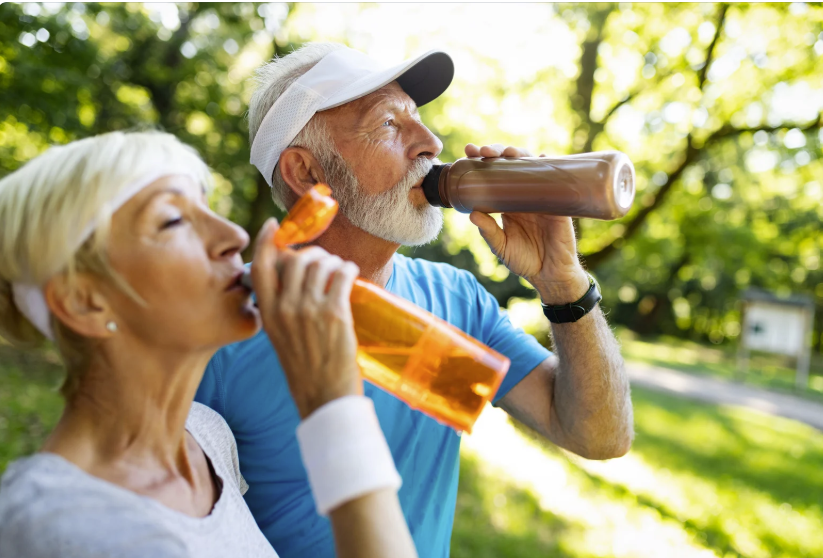
(Yes, we say this all the time. But really. Are you drinking enough water?) As we age, our sense of thirst becomes less reliable. That means by the time you feel thirsty; your body may already be playing catch-up. And if you’re taking certain medications like diuretics or blood pressure meds hydration becomes even more essential.
Tip: Sip water throughout the day. Add fruit slices or herbs if plain water isn’t appealing. (Shelly noted athletes are encouraged to hydrate before they even feel thirsty. Same goes for us.)
2. Dress Smart, Not Just Cute
(Style matters. But so does safety!) Loose-fitting, light-colored clothing made of breathable fabrics like cotton or moisture-wicking materials will help your body stay cooler. And don’t skip the wide-brim hat or sunglasses.
Pro tip: Avoid dark colors because they absorb heat. Think light, bright, and breezy.
3. Time Your Outdoor Activities Wisely
Shelly reminded me that football practices in the South are timed very intentionally (early morning or later evening) to avoid peak heat hours between 10 a.m. and 4 p.m. The same logic applies here.
Plan walks, gardening, or errands in the cooler parts of the day. And if it’s just too hot, move your movement indoors.
4. Know the Signs of Heat-Related Illness
This is a big one. Heat exhaustion often comes with dizziness, nausea, fatigue, or headache. It’s your body’s early warning. Heat stroke is more serious and needs immediate medical help…think confusion, a racing heart, or skin that feels hot but dry.
Shelly has seen how quickly heat issues can sneak up—even in conditioned athletes. That’s why paying attention to early signs is so important for all of us.
(Trust your gut. If you don’t feel right, cool down and call someone.)
5. Be Aware of Medications and Heat Sensitivity
Some common medications make it harder for your body to regulate temperature or hold onto fluids. Talk to your doctor or pharmacist if you’re unsure how your prescriptions may interact with high temps.
This step often gets overlooked, but it’s critical, especially for those managing blood pressure, heart health, or other chronic conditions.
Bottom Line? You Can Still Enjoy Summer-Smartly.
Whether you’re watching grandkids play, walking the dog, or relaxing on the patio, summer can absolutely be joyful, as long as you’re mindful of the heat.
And just like Shelly helps elite athletes perform their best while staying safe, we can do the same by listening to our bodies and planning.
So, here’s to staying safe, staying hydrated, and making the most of this season one cool sip at a time.