
Parkinson’s Disease, the Brain, and the Power of Movement
Published: March 13, 2026
By: Dr. Sue Paul, Sr. Dir. Well-being & Brain Health, Asbury Communities, Inc.
Here are some insights from my conversation with neurologic physical therapist Dr. Mike Studer…
April is Parkinson’s Disease Awareness Month, and recently on Ask Asbury I had the opportunity to sit down with neurologic physical therapist and educator Dr. Mike Studer to talk about a topic we both care deeply about: the powerful connection between the brain and the body.
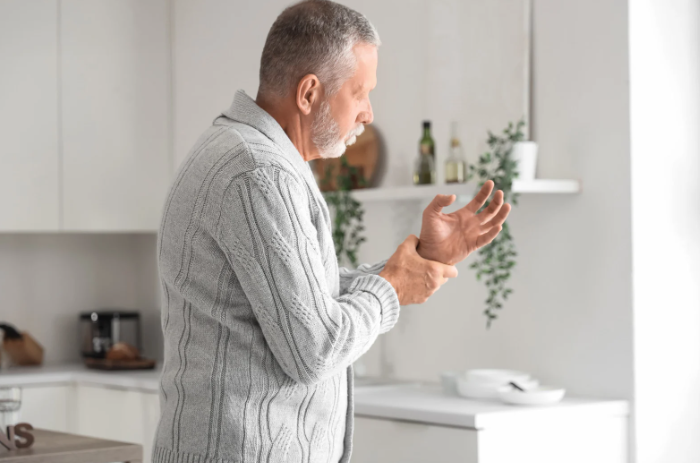
Many people think of Parkinson’s disease primarily as a movement disorder. Tremor, stiffness, and slowed movement are the symptoms most recognized. But as Dr. Studer explained, Parkinson’s is far more complex than that.
In fact, Parkinson’s disease affects multiple systems in the body. It can influence cognition, sleep, digestion, mood, blood pressure, and even how the autonomic nervous system regulates basic bodily functions. Researchers are increasingly recognizing that Parkinson’s may not be one single condition but rather several subtypes, each with its own pattern of symptoms.
That may sound overwhelming at first. But the encouraging part of our conversation was this: the body still has powerful ways to support the brain. And movement is one of the most important.
The Brain’s Ability to Change
A central concept in Dr. Studer’s work is neuroplasticity, which is the brain’s ability to adapt, reorganize, and form new connections.
The human brain contains roughly 83 billion neurons, and those neurons are constantly forming connections when we learn something new. Neuroplasticity is simply the process of building those connections.
The key ingredient is novelty. The brain changes when it encounters something meaningful, challenging, or new.
Learning a new sport. Practicing a dance step. Trying a new musical instrument. Even adapting to a new exercise routine. The brain responds to stimulation by strengthening connections that support learning and function.
Perhaps the most hopeful takeaway from our conversation is this: the brain can change even years after a Parkinson’s diagnosis. Neuroplasticity does not stop because someone has Parkinson’s disease. It simply requires the right kind of stimulation.
Why Thinking and Moving Matters
One of the strategies Dr. Studer emphasizes is something called dual task training. This means combining a thinking task and a movement task at the same time.
For example: walking while having a conversation, stepping while counting backwards, tossing a ball while answering trivia questions, or listening to a story while navigating through a space.
These activities mimic real life. Rarely do we move without thinking or think without moving. Research suggests that dual task activities can strengthen both brain and body systems simultaneously, sometimes even more effectively than training them separately.
In other words, we can exercise the brain and body at the same time. For people living with Parkinson’s disease, this kind of training can improve balance, mobility, cognitive engagement, and confidence.
Lifestyle Still Matters
Another theme that came through clearly in our discussion is that daily habits influence brain health far more than most people realize. Movement, learning, challenge, and enjoyment all send signals to the brain that it should continue adapting.
This is why programs that combine physical activity, cognitive stimulation, and meaningful engagement can have such a powerful impact on people living with neurological conditions.
It’s also why environments matter. When spaces encourage people to move, interact, and stay mentally engaged, they naturally support brain health.
A Message of Hope
Parkinson’s disease is certainly a serious condition. But one of the most important messages from this conversation is that people are not powerless in the face of neurological change.
The brain remains responsive throughout life. And the things that help it the most are often surprisingly simple: move, learn, engage, and try something new.
As Dr. Studer noted during our conversation, neuroplasticity does not care whether you have Parkinson’s disease. It responds to novelty, meaning, and challenges. That perspective reframes Parkinson’s from something that only limits people to a condition that can still be actively influenced by the way we live.
Learn More
Dr. Studer expands many of these ideas in his book, The Brain That Chooses Itself, which explores how lifestyle, movement, learning, and purposeful challenge influence brain health across the lifespan.
For anyone interested in understanding how everyday choices shape the brain’s ability to adapt and thrive, it is an accessible and hopeful read.
You can find the book here: https://www.amazon.com/dp/B0DLP7JVFY